A system for tracking customers. A notetaker. A prospecting tool. An email follow-up tool. Maybe a call analysis tool.
Five tools. Five logins. Five dashboards. And somehow you're still copy-pasting notes from your meeting transcript into HubSpot.
The problem isn't that small teams don't have enough tools. It's that the tools don't talk to each other.
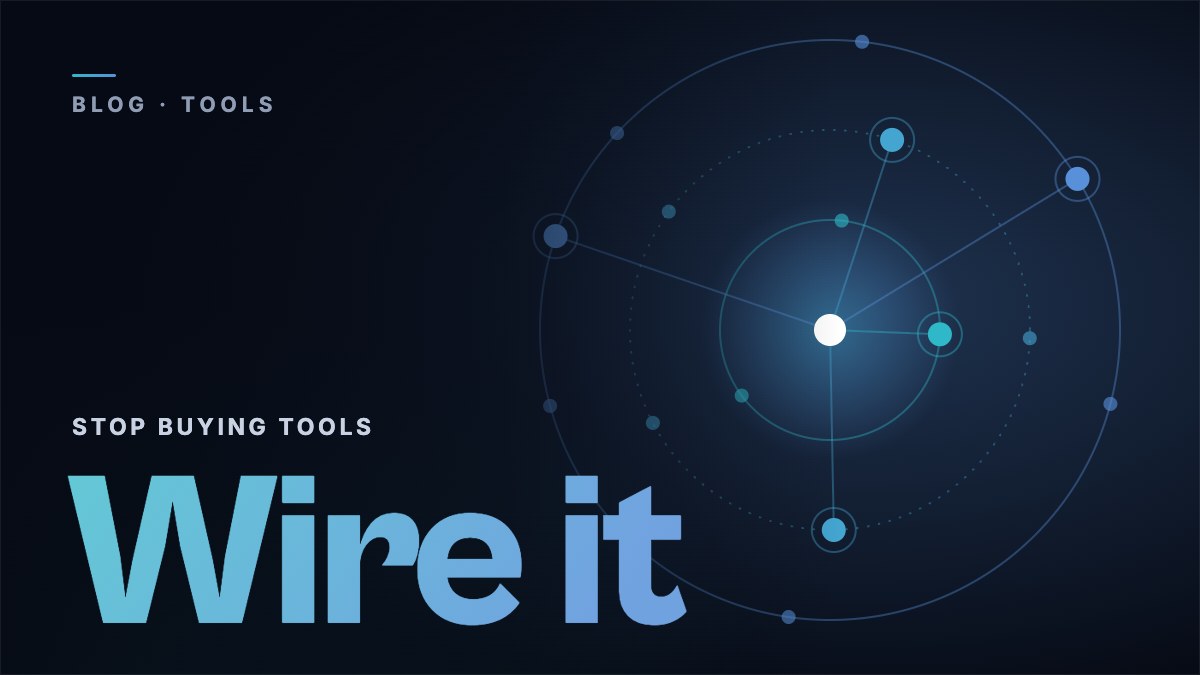
The same five tools, before and after they are wired together.
The problem isn't that small teams don't have enough tools. It's that the tools don't talk to each other.
Your notetaker records the call and gives you a transcript. Great. But it doesn't update the deal stage in your customer records. It doesn't draft the follow-up email using what the buyer said. It doesn't create the action items you promised. It doesn't brief your team on what happened.
So you do all of that manually. Which takes 30-40 minutes per meeting. Which means half the time you skip it because you're busy. Which means your customer records get stale, the follow-up goes out late, and the deal quietly dies.
What the manual plumbing costs
Using the article’s own figure: 30-40 minutes per meeting, done by hand.
Copy-pasted by hand, every week5–7 hours
Formula: meetings per week x 30 to 40 minutes. The article says half the time you skip it, which is how your customer records go stale and the follow-up goes out late.
The Question to Ask Before Buying Any New Tool
Does it flow?
The data from my last meeting automatically flows into…
If the answer is no, you don't need more tools. You need the ones you have to be connected.
This is the gap we obsess over at 60. Not replacing your customer records or your notetaker. Connecting them. The meeting recording flows into transcript analysis. The analysis flows into a follow-up email draft, customer record updates, action items and a Slack brief. You review, approve, send. The system handles the plumbing.
Before you evaluate any new sales tool, read the AI Sales Tools guide we put together. It maps the 6 jobs your tools need to do and recommends one tool per job. Because clarity beats choice when you're a small team.