The deal didn't die in the negotiation. It didn't die because of price. It didn't die because a competitor had a better feature.
It died in the 48 hours after the first meeting, when nobody sent a follow-up that gave the buyer a reason to keep going.
This is the pattern I've seen more than any other when running sales for other companies. The meeting goes well. The buyer is engaged. Then... nothing. The salesperson gets pulled into the next thing. The follow-up slips to tomorrow. Tomorrow becomes Thursday. By Friday, the buyer has had three other meetings with three other vendors, and the memory of your conversation has faded into background noise.
The silence clock
Slide through the hours after the meeting, or tap a label.
- Their exact words
- Their specific concern
- The number they mentioned
- The deadline they're working against
2 hours
The meeting goes well. The buyer is engaged.
Tomorrow
The salesperson gets pulled into the next thing. The follow-up slips to tomorrow.
48 hours
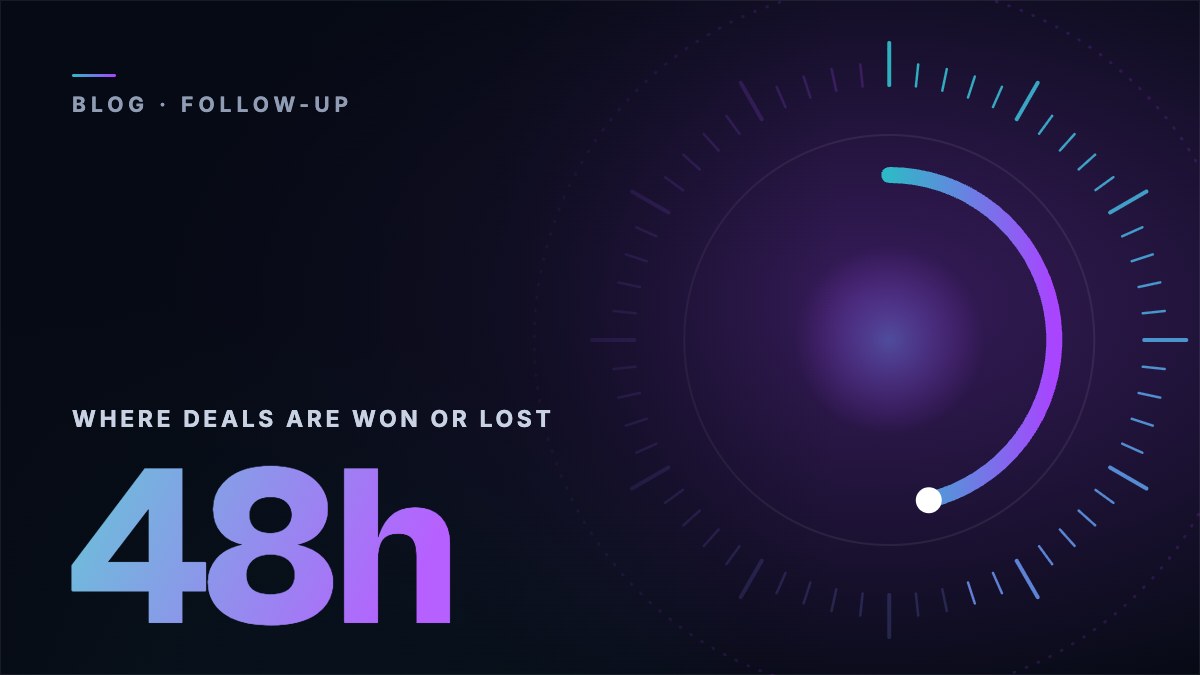
If you haven't sent a specific follow-up written for that buyer within 48 hours of a meeting, the deal is already at risk. Not dead. But at risk.
Friday
By Friday, the buyer has had three other meetings with three other vendors, and the memory of your conversation has faded into background noise.
Follow-ups sent within the first few hours of a meeting tend to land better than emails sent the next day. Not because speed is magic. Because specificity fades.
A follow-up written 2 hours after the meeting references what the buyer actually said. Their exact words. Their specific concern. The number they mentioned. The deadline they're working against.
A follow-up written 2 days later defaults to "Great chatting, let me know if you have questions." That email could have been sent to anyone. The buyer knows it.
Great chatting, let me know if you have questions.
That email could have been sent to anyone. The buyer knows it.
Their exact words
Their specific concern
The number they mentioned
The deadline they're working against
Built only from the four things the article says a follow-up written 2 hours after the meeting references.
The best salespeople I've worked with don't have a special closing technique. They have a post-meeting habit. The meeting ends, they spend 10-15 minutes capturing notes and drafting a follow-up, and it's sent before they move on to the next thing.
That single habit, consistently applied, is worth more than any sales method, upgrade to your customer records system or team training you'll ever buy.
BAMFAM: Book a Meeting From a Meeting
There's one move that makes the 48-hour rule easier to execute - and removes most of the hard work from your follow-up entirely.
BAMFAM: Book A Meeting From A Meeting. It sounds simple because it is. While the buyer is still in front of you - still engaged, still warm, still in the context of the conversation you just had - get the next step in the diary.
Not "I'll send you some times." Not "let me know when you're free." A date. A time. Confirmed before you both close your laptops.
A date. A time. Confirmed before you both close your laptops.
When you do this, your follow-up email isn't a plea for a next meeting - it's a confirmation of one that already exists. The deal stays alive structurally, not through persuasion.
When you don't do this, your follow-up has to do a much harder job.
- Problem 1
Win back someone who has moved on
- Problem 2
Re-establish context that has faded
- Problem 3
Convince them to carve time out of a calendar that has filled up since you last spoke
That's three problems your follow-up shouldn't have to solve.
If you couldn't book the next meeting in the call - they weren't ready, the decision-maker wasn't there, they need time to review - your follow-up needs to do one thing above everything else: propose a specific time. Not "let me know when works." A date. Make it easy to say yes.
Is your follow-up at risk?
Think of the last meeting you took. Answer three questions about the follow-up.
The deal stays alive.
The deal stays alive structurally, not through persuasion.
At risk. Not dead.
Not dead. But at risk. Every hour after that, the risk compounds.
Most deals die here.
It died in the 48 hours after the first meeting, when nobody sent a follow-up that gave the buyer a reason to keep going.
We wrote a complete template library with 7 follow-up emails for every scenario. The follow-up email is step 3 in the post-meeting system. But the system starts within 5 minutes of hanging up the call.